“Should I take this in the morning or at night?” is one of the most common supplement questions. For most products, the honest answer is: the best time is the time you’ll remember. Consistency beats perfect timing.
That said, timing does matter for a handful of supplements — mostly because of how they’re absorbed, whether they upset your stomach, or what they interfere with. Here’s what’s worth knowing.
On this page
Medications first
If you take prescription medicine, ask your pharmacist when to take your supplements. Some supplements need to be separated from medications by several hours. Your pharmacist can build a simple schedule for you.
Three general rules
- Fat-soluble vitamins (A, D, E, K) go with food that contains fat. They’re absorbed along with dietary fat.
- Some minerals compete with each other. Calcium, iron, zinc and magnesium can interfere with each other’s absorption when taken together in large doses.
- If it upsets your stomach, take it with food — unless it specifically needs an empty stomach.
Quick reference table
| Supplement | Best timing | With food? | Keep apart from |
|---|---|---|---|
| Multivitamin | Morning or with your largest meal | Yes | Separate from thyroid medication |
| Vitamin D | With a meal that contains fat | Yes | — |
| Vitamin B complex | Morning | Either; with food if it causes nausea | — |
| Vitamin C | Any time; split larger doses | Either | Can be taken with iron to help absorption |
| Iron | Morning, on an empty stomach if tolerated | Ideally no (with a little food if it upsets you) | Calcium, coffee, tea, dairy, antacids |
| Calcium | Split into doses of about 500 mg or less | Carbonate: with food. Citrate: either | Iron, thyroid medication, some antibiotics |
| Magnesium | Evening is popular | Either; with food reduces stomach upset | Some antibiotics, osteoporosis drugs |
| Fish oil / omega-3 | With a meal | Yes | — |
| Probiotics | Follow the label | Varies by product | Antibiotics (separate by a few hours) |
| Melatonin | 30–60 minutes before bed | — | — |
| Creatine | Any time, daily | Either | — |
| Electrolytes | Spread through the day, around exercise | Either | — |
Morning supplements
Iron
Iron is absorbed best on an empty stomach, and vitamin C (or a little orange juice) helps. But iron often causes nausea or constipation; taking it with a small amount of food is better than not taking it at all. Avoid coffee, tea, milk and calcium supplements within an hour or two, as they reduce absorption.
B vitamins
Many people take B vitamins in the morning simply because they’re part of a multivitamin. Some report feeling more alert, but evidence that timing matters is limited. Take them with food if they cause nausea. Note that B2 (riboflavin) can turn urine bright yellow — harmless.
Multivitamins
With breakfast or your largest meal. The food helps absorb fat-soluble vitamins and reduces stomach upset.

With meals
Vitamin D, A, E and K
Take these with a meal that contains some fat. Studies have found that vitamin D is absorbed better when taken with fat-containing food than without.
Fish oil
Taking omega-3s with food improves absorption and reduces “fishy burps.” Splitting the dose between two meals can help further.
Calcium
Your body absorbs calcium best in doses of about 500 mg or less at a time. Calcium carbonate needs stomach acid, so take it with food. Calcium citrate can be taken with or without food and is often recommended for people who take acid-reducing medication.
Evening supplements
Magnesium
Evening is a popular time for magnesium, partly because some people find it relaxing. Research on magnesium and sleep is limited and mixed, so think of evening timing as a preference. Glycinate tends to be gentler on the stomach; citrate may loosen stools, which some people take advantage of.
Melatonin
Take it 30–60 minutes before bed. Lower doses (0.5–3 mg) are often as effective as higher ones. Melatonin is best for short-term issues like jet lag; talk to your doctor about ongoing sleep problems.
Combinations to separate
- Iron and calcium: take at least two hours apart.
- Zinc and iron, or zinc and calcium: large doses compete; separate if you take high-dose supplements.
- Fiber supplements and everything else: fiber can reduce absorption of minerals and medicines — take it a couple of hours apart.
- Green tea or coffee and iron: compounds in both reduce iron absorption.
Medication interactions that matter most
These are common enough to know about. Always confirm details with your pharmacist.
- Thyroid medication (levothyroxine): take it on an empty stomach, usually 30–60 minutes before breakfast. Calcium, iron, magnesium and multivitamins are commonly separated from it by about four hours.
- Certain antibiotics (such as tetracyclines and fluoroquinolones): calcium, magnesium, iron and zinc can bind to them and make them less effective. Separate by several hours as directed.
- Blood thinners (warfarin): vitamin K and some supplements, including high-dose fish oil and certain herbs, can affect how warfarin works. Don’t start or stop supplements without talking to your doctor.
- Biotin and lab tests: high-dose biotin can interfere with some blood tests, including thyroid and heart tests. Tell your doctor if you take it — you may be asked to pause it before testing.
Building a routine you’ll stick to
- Anchor supplements to existing habits — breakfast, brushing your teeth, dinner.
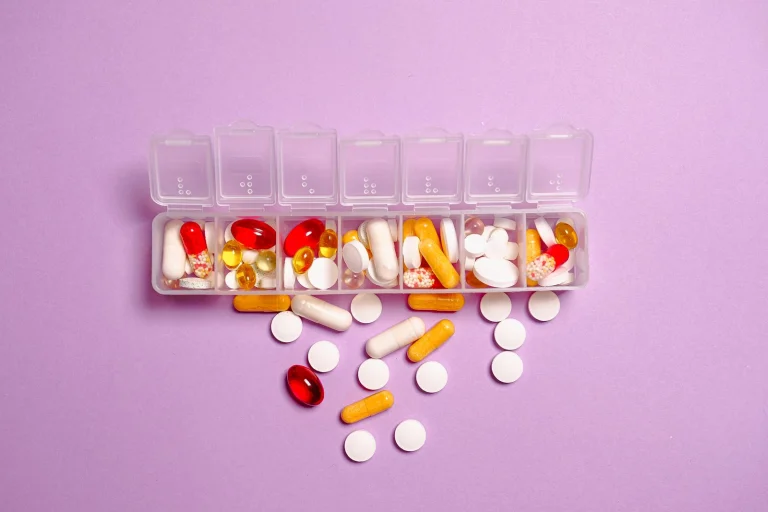
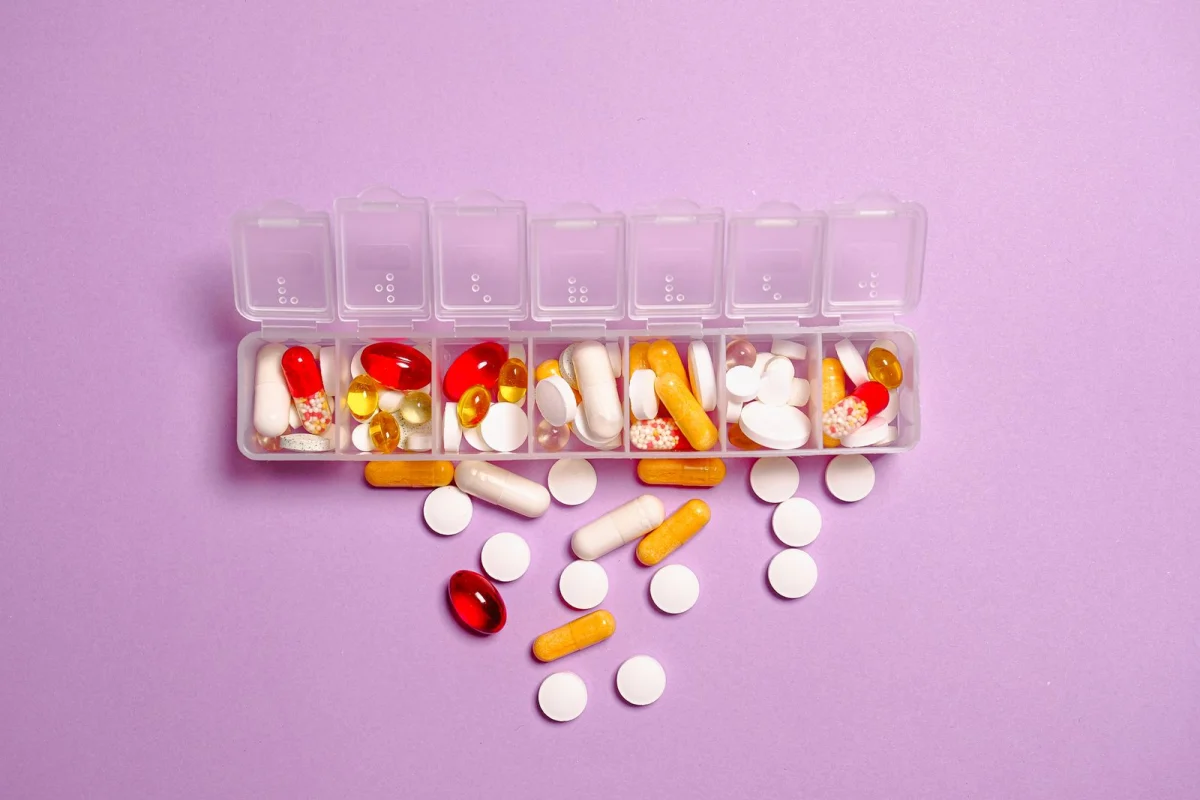
- Use a weekly organizer with AM/PM compartments.
- Keep it simple. Fewer products, taken consistently, beat a complicated stack you forget.
- Review your list once a year with your doctor or pharmacist. Needs change.
Frequently asked questions
Can I take all my supplements at once?
Many can be taken together, but some combinations compete for absorption — especially calcium with iron. If you take several products, ask a pharmacist to help you split them sensibly.
Does taking vitamins on an empty stomach work better?
For most vitamins, no. Fat-soluble vitamins actually need food with fat. Iron is the main exception, and even then food can be used if it causes stomach upset.
Should I stop supplements before surgery?
Some supplements, including fish oil and certain herbs, may affect bleeding or anesthesia. Tell your surgical team everything you take and follow their instructions.
Do supplements expire?
Yes. Potency can decline over time, especially with heat and humidity. Check the date and store products as directed.
The bottom line
For most supplements, consistency matters more than the exact hour. The exceptions are worth remembering: take fat-soluble vitamins and fish oil with meals, keep iron away from calcium and coffee, split large calcium doses, and give thyroid medication and some antibiotics plenty of space. When in doubt, let your pharmacist set the schedule.
Before you buy anything new, run it through our supplement label checklist.